Guides
Practical guides for making silicone moulds from 3D prints, designing printed formwork, casting concrete and Jesmonite, and sizing candle vessels.
- 019 min read
Making a silicone mould from a 3D print
Everything that decides whether your first pour cures, releases and lasts: which silicone to buy, how to prepare a printed master, how much to mix and how to get the master out again without tearing anything.
Read more - 029 min read
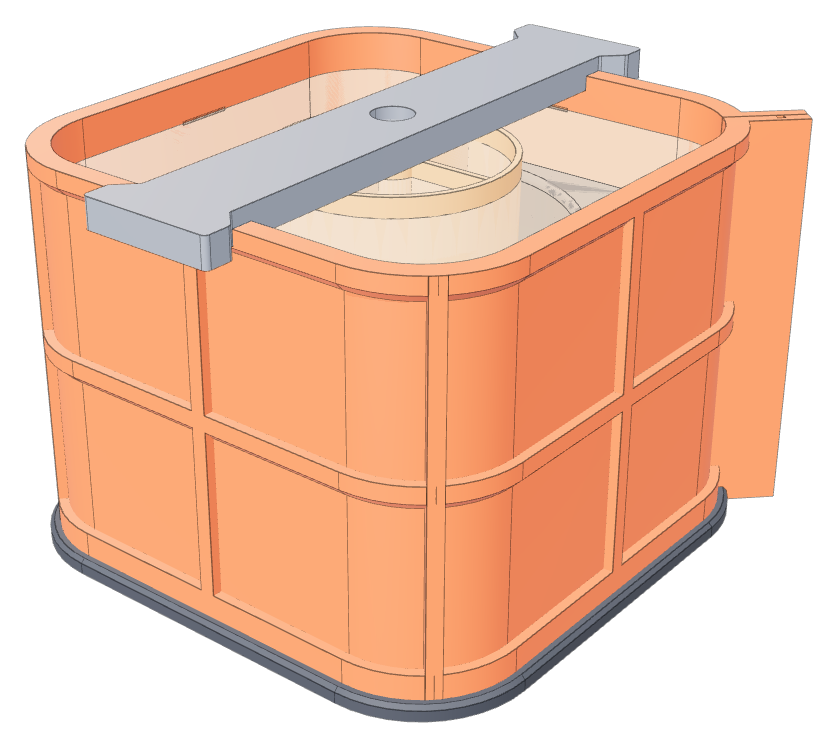
3D-printed formwork for silicone moulds
The frame is the cheapest part of a kit and the one that decides whether the pour leaks, whether the core drifts and whether the cured block comes out in one piece. How a Mouldery formwork is designed, what the clearances mean, how to print each part and what to do when something does not fit.
Read more - 0310 min read
Casting concrete and Jesmonite in a silicone mould
Which mix to choose, how much water it really wants, how to get the bubbles out of a 6 mm wall, and why a Mouldery vessel is cast upside-down with its bottom open. Demould times, drying, sanding and sealing, and how to make the mould last.
Read more - 048 min read
Candle vessels: sizes, wax volume and wicks
What a 4, 8 or 12 oz jar means in millimetres, how to turn the capacity the studio computes into grams of wax, what the ⌀23 mm wick socket is for, which wick goes with which cavity, and the safety rules that apply to concrete around a flame.
Read more
Your next vessel is one evening of printing away.
Configure it in the studio, print the kit tonight, pour silicone tomorrow.