Questions makers ask before their first kit.
Short answers. The guides go deeper on silicone, formwork and casting.
Still unsure? Write to hello@mouldery.com.
What exactly is in a kit?
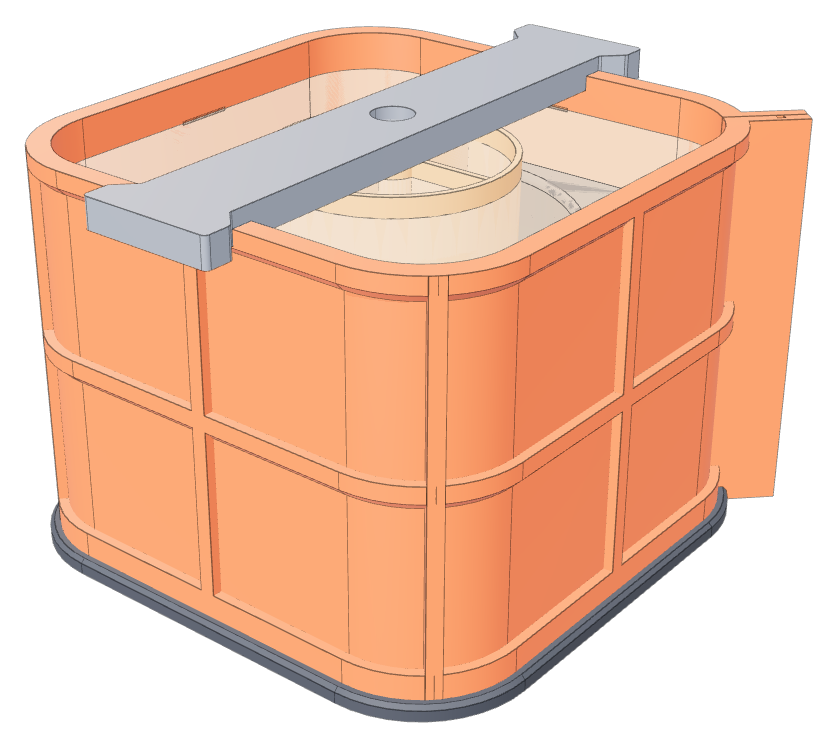
A ZIP with nine STL files — master model (plus a plain variant), one-piece formwork (plus a two-half variant), base plate, rigid core, bridge, wick centring tool and a reference model of the finished vessel — plus a README with the hardware list, silicone and concrete quantities, print settings per part and the step-by-step.
Which 3D printer and filament do I need?
Any FDM printer with a 220 × 220 mm bed covers the current presets. PLA works for every part; PETG if your workshop gets warm. The formwork prints upright with a 0.6 mm line width and two perimeters, no supports on any part.
Which silicone should I use?
A pourable mould silicone of Shore A 15 to 25. Tin-cure (condensation) silicone is cheaper and tolerant with printed masters. Platinum silicone lasts longer but can be inhibited by some prints: seal resin masters with spray paint or acrylic sealer and test on a scrap print first.
How much silicone will I need?
Your README gives the computed volume plus a loss margin, in millilitres and grams. For an 80 mm candle jar it is roughly 430 ml computed, 470 ml to buy. Tray presets need less, deep planters more.
Do I need draft angles?
No. The vessel is released by deforming the silicone block, and the inner sleeve peels out of the cavity once the rigid core is removed. Straight walls and light undercuts demould fine. The core itself carries 1° so it slides out of its sleeve.
Can I sell what I cast?
Yes. Personal and commercial use of the cast objects is included with every kit, with no expiry and no subscription. What you may not do is sell, share or publish the STL files or the printed mould parts. See the licence.
How quickly do I get the files?
The kit is made in your browser from your exact parameters as soon as you ask for it, nothing is generated or stored on our servers. The download link appears on the confirmation page and is sent to your email.
Can I change a kit after downloading it?
Each generated kit is a separate download. Designing and previewing in the studio is free, so adjust until the preview is right, then generate. The Studio Pass, coming soon, will cover unlimited generations for a year.
Which castables work?
Fine concrete and rapid-set CSA cements, Jesmonite AC100, plaster and casting resin. Wax is poured into the finished vessel, not the mould. Mix ratios and demould times are in the casting guide.
The parts do not fit together.
Fits are deliberately tight: 0.15 mm for the formwork on the plate, 0.2 mm for the bridge. If a part binds, your printer is over-extruding. Lower the flow by 2–4 % or calibrate your extruder rather than filing the parts.
Why does the formwork have a split?
The cured silicone block is removed by opening the frame at its split corner: no prying, no tearing. Two binder clips hold the tongue-and-groove lock shut during the pour.
Refunds?
Kits are digital goods generated to order, so there is no return once downloaded. If the files fail to generate or are faulty, write to us within 14 days and we will regenerate or refund.
Your next vessel is one evening of printing away.
Configure it in the studio, print the kit tonight, pour silicone tomorrow.